

Deliberation 1: Your Right to Representation
Should every citizen’s voice count equally?
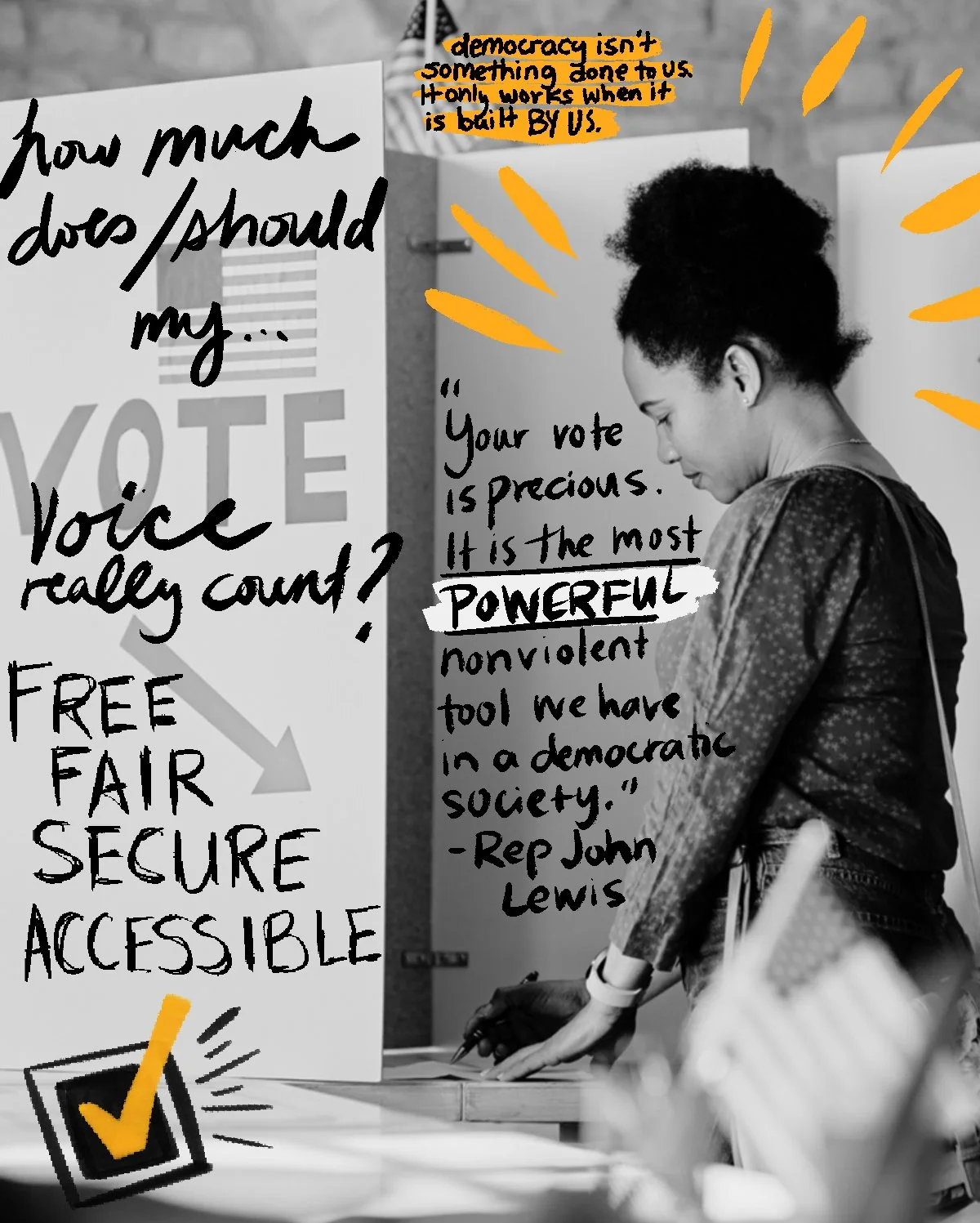
Explicitly:
Is the Electoral College incompatible with a modern democracy?
If political equality is a core democratic value, what rules or reforms are needed to make sure every citizen’s voice carries equal weight in our elections?
Should the President of the United States be chosen by the direct popular vote of the people?
Should the Supreme Court’s Citizens United decision be overturned? If so, what would a democracy look like where money is not treated as speech?
Do corporations have constitutional rights in the same way people do? Where, if anywhere, should the line be drawn between economic entities and human citizens?
How should elections be funded to ensure political power rests with voters rather than corporations, billionaires, or Super PACs?
Information for joining the deliberation: Coming Soon!
Background
The Electoral College was created in 1787 because the founders didn’t fully trust regular people to choose the president. Some wanted a popular vote, but others were scared big states would win every time or that everyday voters would have too much power. So they built a workaround that mixed public votes with state control - and boosted the power of slaveholding states in the process. People have been pushing back ever since, especially when the person with fewer votes wins the presidency. A popular-vote amendment even passed the House in 1969 but got blocked in the Senate by segregationists, pushing reform to the state level instead. The real question now is simple: should a system built for a very different America still decide our future today?