

Deliberation 3: Your Right to Health
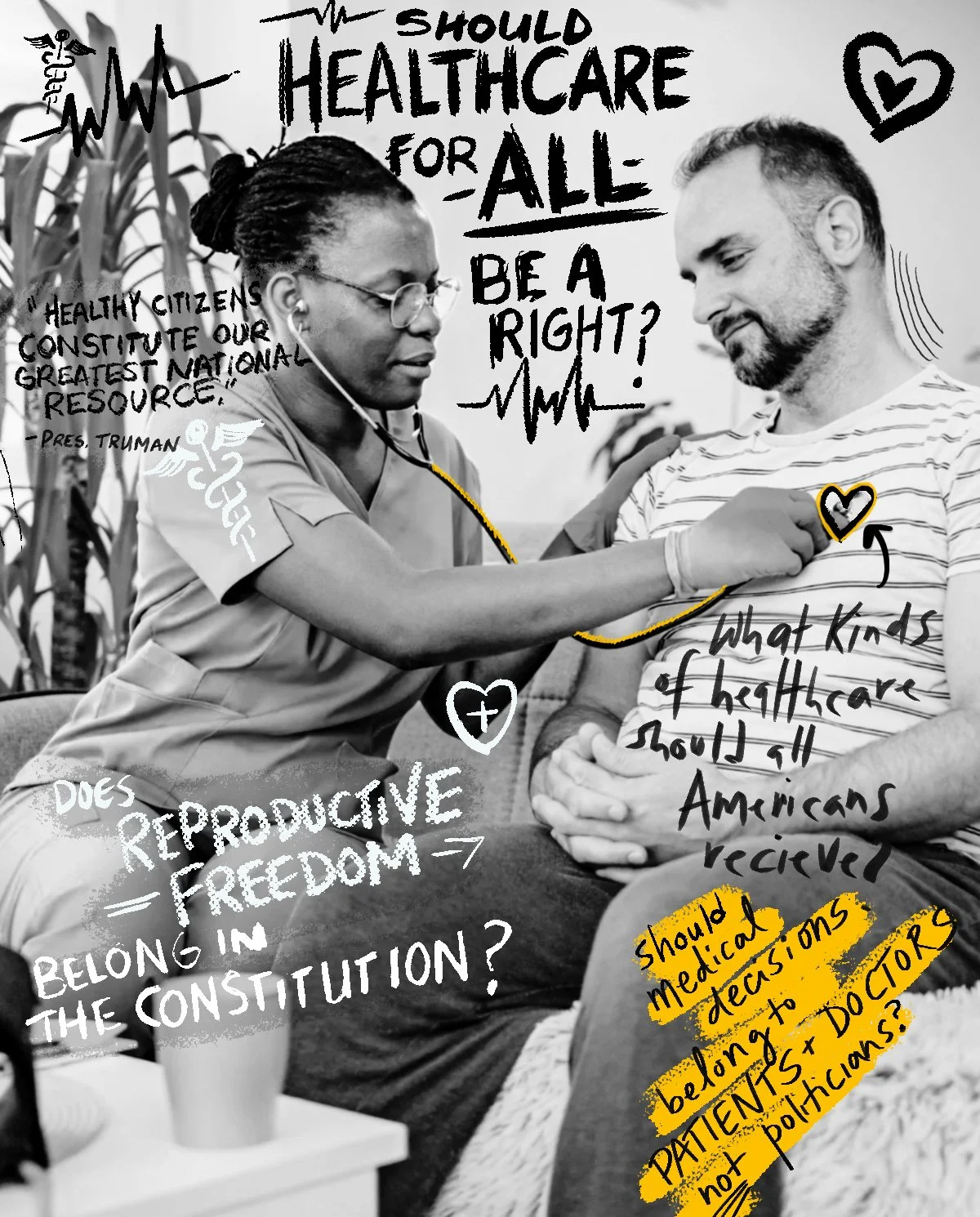
Should healthcare be a right?
Explicitly:
Should the Constitution guarantee universal access to healthcare as a fundamental right for everyone in the United States?
Should mental health care be recognized as essential care, and protected as a constitutional right?
Should the Constitution protect full reproductive freedom and bodily autonomy?
What healthcare services - such as maternal care, disability care, and gender-affirming care - should be explicitly protected to ensure dignity, safety, and equality?
Who should have the authority to make medical decisions?
Should any government entity be allowed to deny or restrict healthcare based on gender, disability, income, immigration status, or identity?
How should a constitutional right to healthcare be enforced, and what obligations would it place on federal and state governments?
Information for joining the deliberation: Coming Soon!
Background
The Constitution never says healthcare is a right. There’s no clear guarantee of medical care, mental health support, bodily autonomy, or the freedom to make personal health decisions. Instead, these issues have been loosely tied to ideas like liberty, privacy, and equality, leaving most healthcare up to politicians, courts, and state borders. That means care depends on where you live, how much you make, and what the politics look like that year. Mental health, disability care, maternal care, and gender-affirming care were never named as rights at all—making them especially easy to cut, restrict, or politicize.
The consequences are real. In the U.S., access to healthcare is still tied to jobs and insurance, mental health care is underfunded and stigmatized, reproductive freedom swings with court rulings, and maternal death rates - especially for Black and Indigenous women - remain shockingly high. Disabled people and trans people are constantly forced to fight just to be seen, respected, and treated. Again and again, movements from civil rights to HIV/AIDS activism to reproductive justice have asked the same question: should health be a privilege, or a right? And should medical decisions belong to patients and doctors, not politicians?