

Deliberation 5: Your Right to Equality
Should there be equal treatment under the law and in life, regardless of race, gender identity, sexuality, ability, or faith?
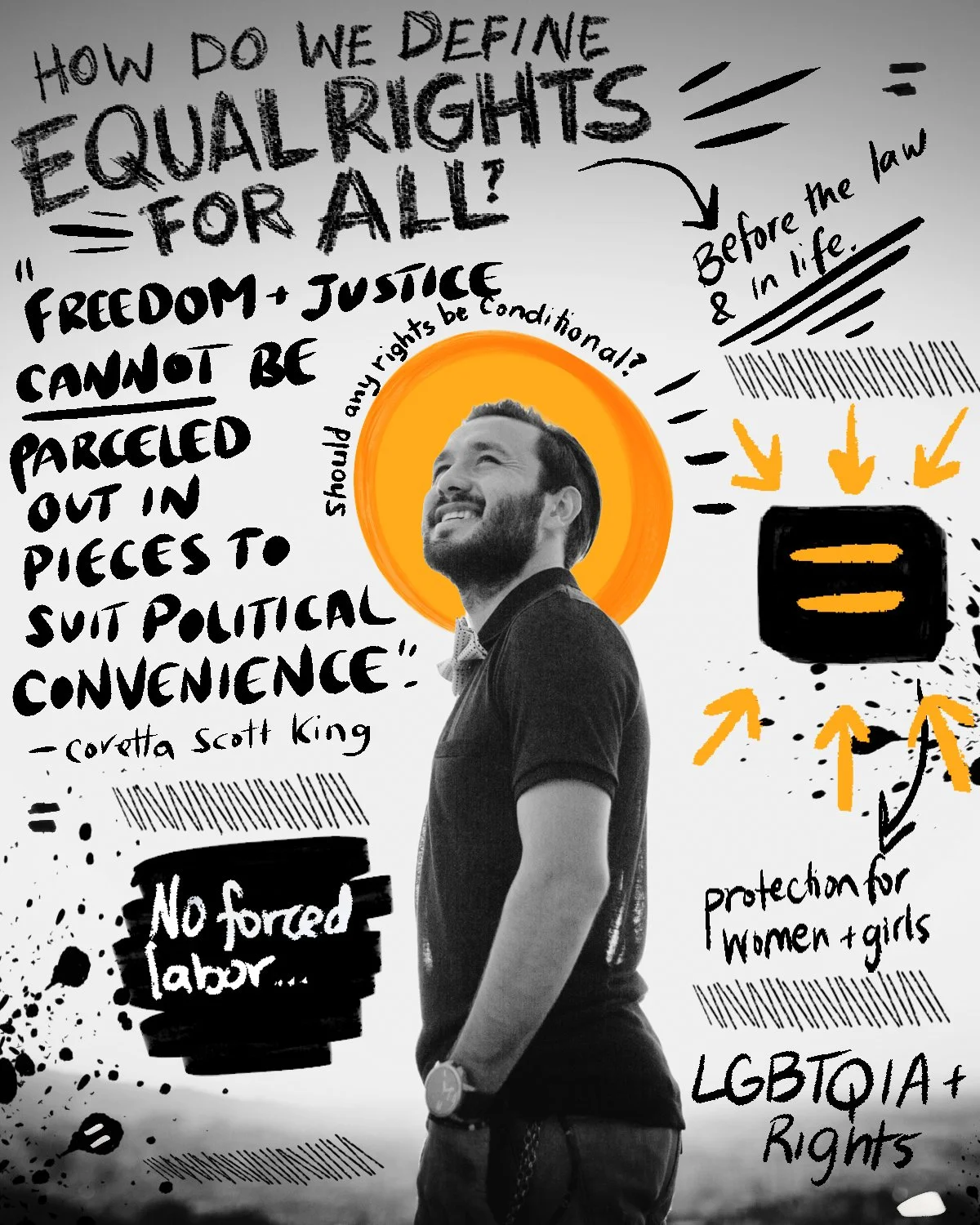
Explicitly:
Should the Constitution explicitly guarantee equal protection and equal treatment for all people, with no exceptions based on race, gender identity, sexuality, ability, or faith?
Should full and equal rights for women and girls be named and protected explicitly in the Constitution?
Should transgender and gender-diverse people be explicitly guaranteed full and equal rights under the Constitution?
How should equal protection be enforced when laws or policies have unequal impacts, even if discrimination is not explicitly stated?
Should the Constitution continue to allow forced labor as punishment for a crime, or should it guarantee that no one - including people who are incarcerated - can be forced to work against their will?
What role should the Constitution play in preventing future forms of discrimination that may not yet be fully recognized today?
Information for joining the deliberation: Coming Soon!
Background
The Constitution talks about equality, but it never fully guaranteed it. The original document left a lot of people out, and even the Fourteenth Amendment - passed after the Civil War - only promised “equal protection” without clearly defining what that means. It doesn’t name race, gender, sexuality, disability, or faith, so equality has been left up to courts to interpret. Sometimes rights expand. Sometimes they shrink. That means equality in America has often depended on who’s in power, not by clear, permanent rule.
People have spent generations fighting to close that gap. From Reconstruction to women’s suffrage, civil rights, disability rights, and LGBTQ+ movements, progress has come through pressure, protest, and persistence - not automatic protection. The Equal Rights Amendment tried to lock in gender equality but still hasn’t been fully ratified, and many communities are still fighting for explicit protection from discrimination.
Furthermore, while the Thirteenth Amendment ended slavery but left an exception for people convicted of crimes. That exception still allows forced prison labor with limited protections - raising a core question about whether people who are incarcerated are truly treated as equals under the law.