

Deliberation 10: Your Right to a Government for the People
Should the people retain the permanent right to protect their democracy from authoritarianism, corruption, and abuse of power?
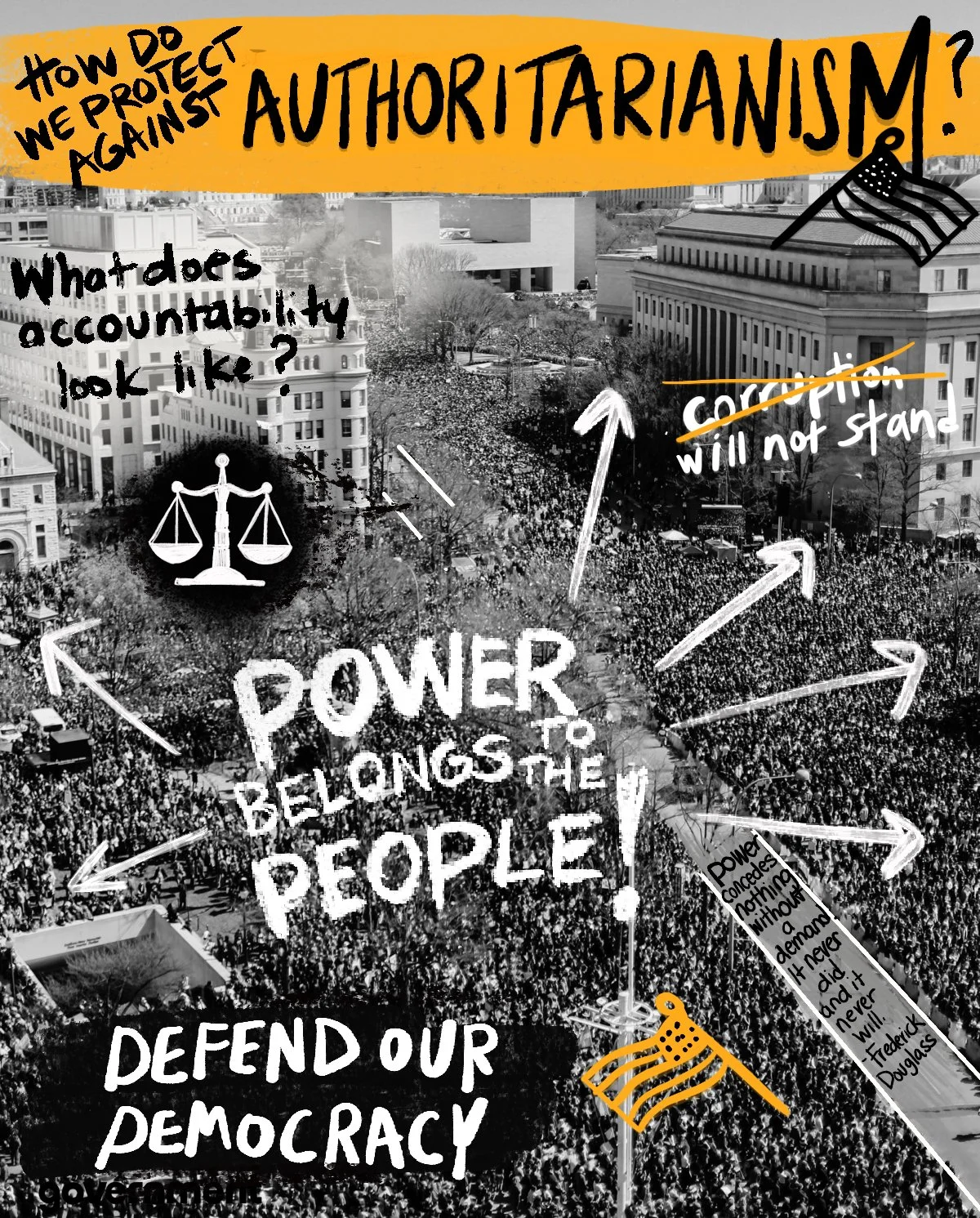
Explicitly:
Should all government officials - including the President - be fully accountable under the law?
What standards of evidence, process, and public participation should govern the democratic removal of officials to protect both accountability and stability?
Should the Constitution require full transparency of government actions, budgets, contracts, and decision-making, in clear and accessible language?
How should the Constitution prevent authoritarian capture - when individuals or factions attempt to sabotage, seize, or paralyze democratic institutions?
Should the people have an ongoing constitutional right to oversee, review, and correct their government beyond periodic elections?
Should the right to defend democracy be non-suspendable, even during emergencies, crises, or political unrest?
Information for joining the deliberation: Coming Soon!
Background
The Constitution says power belongs to the people - but it never fully explains how we keep those in power accountable between elections. It sets up checks, elections, and impeachment, but it doesn’t clearly say that no one is above the law, or that the public has an ongoing right to transparency and oversight. The founders feared tyranny, but they didn’t imagine modern problems like executive immunity claims, mass secrecy, permanent gridlock, or democracy being hollowed out from the inside. Too often, the system relies on “good faith” instead of enforceable rights held by the people.
History shows why that’s risky. From Watergate to post-9/11 surveillance, moments of fear and crisis have repeatedly expanded government power while shrinking accountability. Reforms like the Freedom of Information Act (a U.S. law that gives the public the right to request records from federal government agencies), independent investigations, and ethics rules only came after abuse was exposed - and even then, they were limited. The People’s Bill of Rights asks a basic question for our time: should democracy depend on trust and tradition, or should the people have permanent rights to transparency, accountability, and the power to intervene when democratic institutions are under threat - no matter who’s in charge?