

Deliberation 8: Your Right to Voice
Should the rights of the first amendment (freedom of religion, speech, press, assembly, and petition) be expanded?
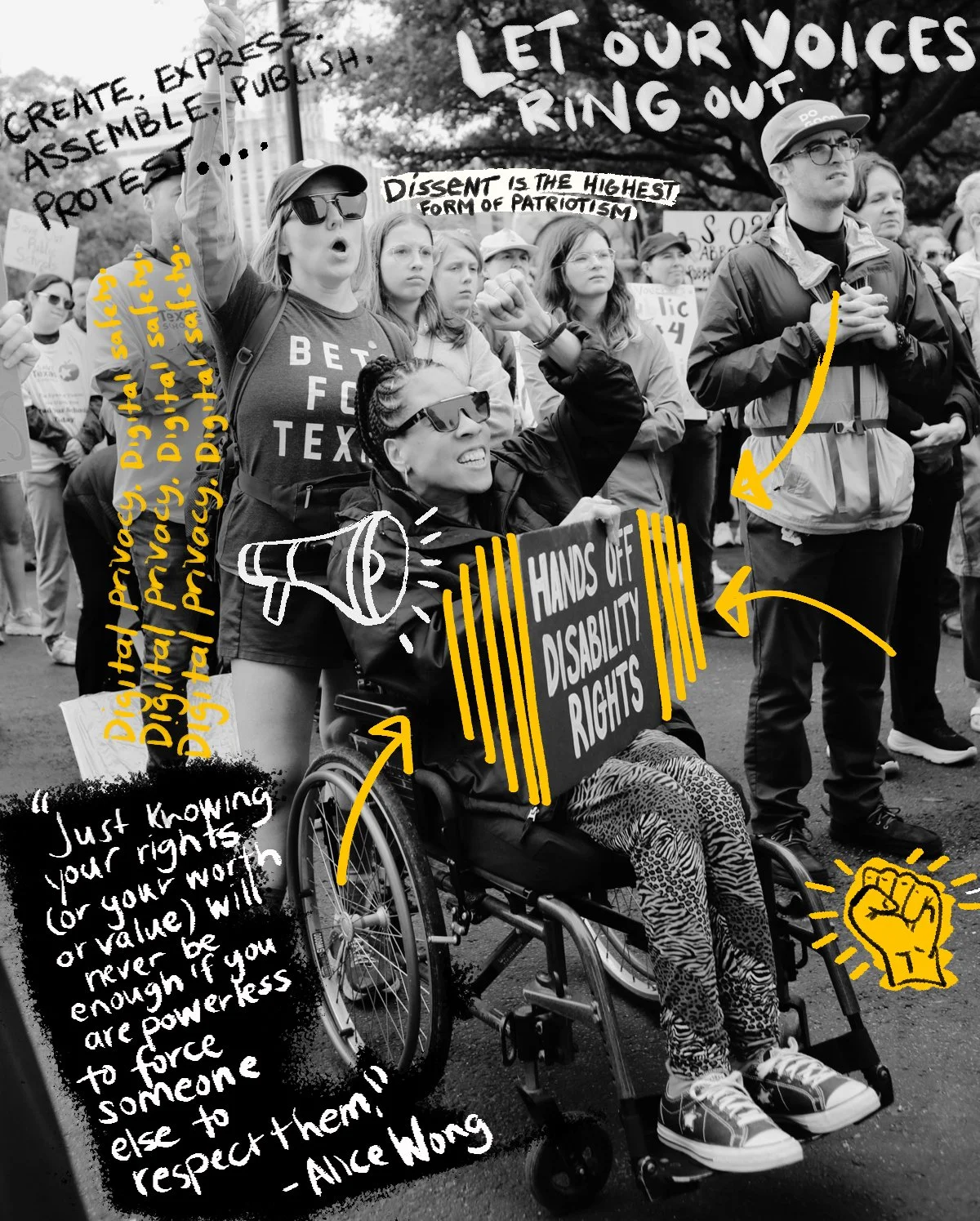
Explicitly:
Should the Constitution explicitly protect the right to speak, create, assemble, and imagine freely in both physical and digital spaces?
How should the Constitution safeguard the right to protest and assemble without fear of surveillance, retaliation, or criminalization?
Should artistic and cultural expression receive explicit constitutional protection, including for work that challenges power or dominant narratives?
What limits, if any, should exist on government or corporate control over speech in digital spaces that function as today’s public square?
Should digital privacy be recognized as a constitutional right essential to free expression and democratic participation?
How should the Constitution protect free expression while preventing censorship, intimidation, or silencing by the state or powerful actors?
What safeguards are needed to ensure that future forms of speech and expression, especially those created through new technologies, remain free?
Information for joining the deliberation: Coming Soon!
Background
The First Amendment puts free expression at the center of democracy - protecting speech, press, protest, and belief - but it was written for an 18th-century world. It doesn’t clearly cover artistic freedom, digital speech, privacy, or life under mass surveillance. And history shows these rights have never been absolute. Governments have repeatedly limited speech in the name of “security” or “order,” exposing a growing gap between old protections and how people actually communicate, organize, and create today.
Every major expansion of freedom has come from people pushing back - abolitionists, labor organizers, civil rights leaders, artists, and protest movements who were surveilled, censored, or punished for speaking out. From Red Scares to COINTELPRO (an FBI program that spied on, infiltrated, and disrupted political and activist groups), to modern digital surveillance, the pattern is clear: when power isn’t checked, voices are silenced. If people are afraid to speak, create, or organize - online or offline - can democracy survive without stronger protections for voice in all its forms?